










Brookhaven Researchers Study How Forest Fires Influence Tick Populations


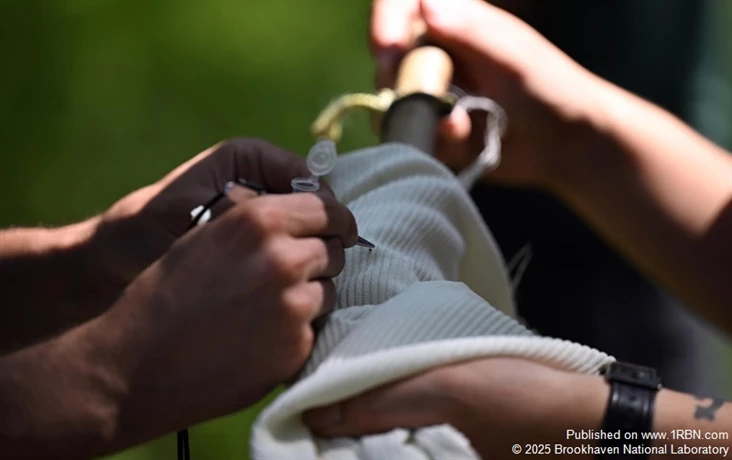
Photo by Brookhaven National LaboratoryResearchers carefully prepare sampling equipment while wearing protective clothing treated with insecticide to prevent tick exposure.
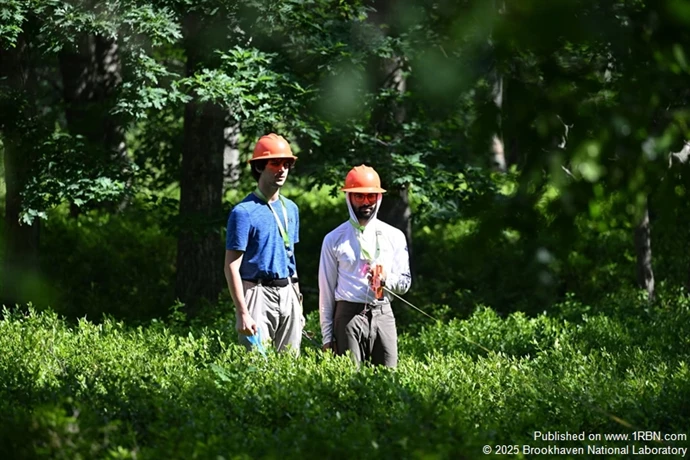
Photo by Brookhaven National Laboratory Students conduct fieldwork in a wooded study area, surveying vegetation and environmental conditions tied to tick habitats.

Photo by Brookhaven National Laboratory Team members deploy a drag cloth to collect ticks across forest plots with different fire histories.
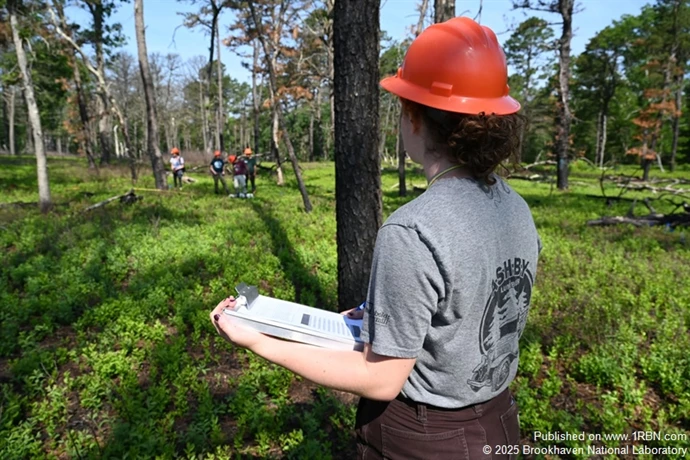
Photo by Brookhaven National Laboratory A student researcher records field data while observing sampling efforts across a previously burned forest area.
Researchers at Brookhaven National Laboratory are exploring how forest fire history may influence tick populations and long-term public health outcomes. On November 22, 2025, a team of students conducted fieldwork across multiple forest plots with different fire histories to better understand how habitat conditions affect tick abundance.
Safety was a priority throughout the study, with researchers wearing long pants pre-treated with permethrin insecticide, long socks, and protective gear while working in dense vegetation. Using standardized sampling techniques, the team recorded tick populations in areas shaped by varying levels of fire disturbance.
By examining how prescribed burns and past wildfires alter tick habitats, the research aims to inform forest management strategies that could reduce tick exposure and the risk of tick-borne diseases. The findings may help guide land-use decisions that protect both ecosystems and public health.
No information from the author.