






The Chemistry of Fire Part 1


All firefighters have to essentially know is “put the wet stuff on the red stuff” right? As firefighting and fire science has evolved and become more complex this statement has become increasingly obsolete. Indeed, knowledge equals power and in the case of modern firefighting knowledge of the chemistry behind the fire equals the power to overcome the flames. Before diving into some basic chemistry think about the materials in a room and contents fire from a few decades ago when most if not all combustible items were of natural fibers whereas now those same contents are petroleum based.
At the scene a change in what a couch is made of has sped up the fire stages, increased the heat and possibility of structural collapse. These factors have in turn warranted faster response times as well as more emphasis on firefighter health and safety at the scene and long term.
What you may not realize is that chemistry has already affected how fires are put out and one needs to look no further than fire extinguishers to see that. The various classes of extinguishers are designed to put out specific types of fires based on the chemistry of that fire. For example, a Class D extinguisher is made specifically for combustible metals such as magnesium and lithium by forming a crust to block and prevent oxygen from fueling the fire.
The chemistry behind how this works lies within the periodic table of elements and how atoms of those elements combine to form molecules. The atom has several components including positively-charged protons and neutral neutrons in the center or nucleus while negatively-charged electrons are circulating around the outside of the nucleus in various layers called shells. The most important shell is the outermost one called the valence shell because it is this shell that contains the valence electrons that are responsible for how elements combine.
{Photo A}
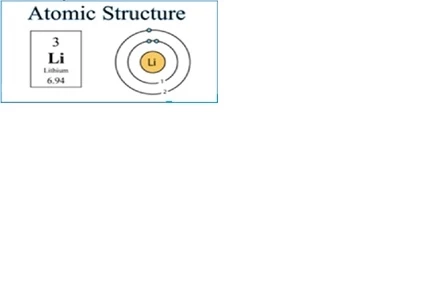
Pictured above is Lithium; element #3 on the periodic table of elements because it has three protons and three neutrons in its nucleus and three electrons circling the nucleus. Each element is unique based on the number of electrons and thus the number of shells it has. The first shell of EVERY element has two electrons (Hydrogen is the exception because it only has one electron to begin with) while all other shells can have a maximum of eight electrons.
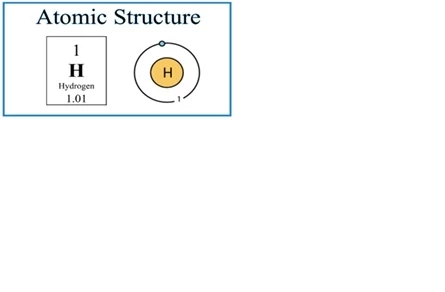
The goal of each element is to have the valence shell either completely full or completely void of electrons. It is this property that determines which elements combine easily and in how many atoms are needed for molecules and thus a chemical reaction to take place. Sticking with lithium as an example; it has one electron in its valence shell so it will either look to add seven electrons or get rid of one electron. Because it is easier for lithium to get rid of one electron as opposed to gaining seven it will combine more readily with elements that are looking to add an electron such as hydrogen. The latter is element number one (see below) and fits the bill for lithium and itself as it is looking to gain the one electron that lithium is looking to give away.
Although there are several types of chemical bonds the three most discussed in basic chemistry ionic, covalent and diatomic. Ionic bonds are strong and are characterized by a strong element such as lithium literally ripping away an electron away from a weaker element. Covalent bonds are also strong but are so because the two combined elements share electrons. Diatomic bonds are relatively weak bonds and are usually confined to gaseous elements (like hydrogen and oxygen) because they like to be in pairs. As an aside the latter actually also exists in a triple combination called ozone.
{Photo B}
Let’s now take a look at how these two elements combine in a chemical equation. The arrow in chemistry is viewed as the equals sign in math and is read as “yields” while the (s) means solid and the (g) is gas form. The resulting compound is Lithium Hydride and is a stable crystalline-looking solid.
2Li(s) + H2(g) ? 2LiH(s)
Now let’s take this one step further. Let’s combine lithium with everyone’s favorite compound – water. As one might surmise (l) is liquid and (aq) is aqueous.
2Li(s) + 2H2O(l) ? 2LiOH (aq) + H2(g)
Let’s now bring this back and relate it to firefighting. A lithium battery powered car is on fire. Your department shows up to put the wet stuff on the red stuff. However, the fire keeps burning and the engine is now running low on water. Why is this happening? Because the burning lithium is combining with the water you are putting on the fire and releasing hydrogen gas which in turn is fueling the fire. In other words, the water you are putting on a lithium-based fire is actually fueling the fire even more to the point where even immersing that car in a pool wouldn’t put it out. Now as the officer in charge you have to think of another tactic.
As electric cars using lithium batteries are becoming more and more common does your department have a protocol for handling this type of fire? Magnesium also reacts similarly to lithium in water and is found in steering columns of many vehicles. This is something to be cognizant of when rolling up on a car fire i.e. where is the fire within the vehicle because that may alter your approach to that fire.
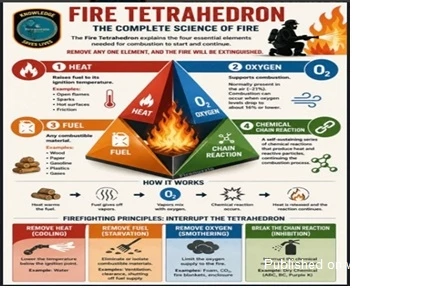
Add into this basic chemistry aspect the very familiar fire tetrahedron pictured below. Removing any one of the parts will extinguish the fire and knowing, for example, how oxygen bonds with other elements and responds in a chemical reaction can have an impact on fire operations.
{Photo C}
No information from the author.