










Belfast Fire and Rescue Trains in Cold Water Rescue Operations


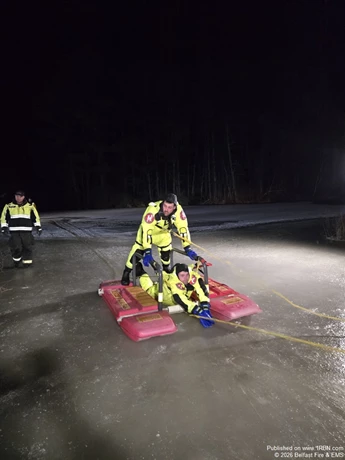
Photo by Belfast Fire & EMSBelfast Fire & Rescue members maneuver an ice rescue sled during nighttime cold water rescue training on frozen water.
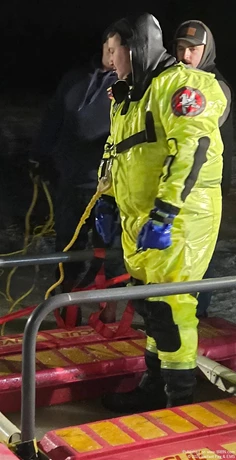
Photo by Belfast Fire & EMSFirefighters in cold water rescue suits advance a tethered ice rescue sled while simulating victim access and removal.
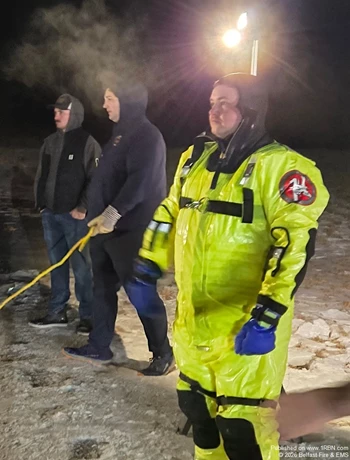
Photo by Belfast Fire & EMSA Belfast Fire & Rescue firefighter stands ready on the ice in full cold water rescue gear as safety lines are managed during training.
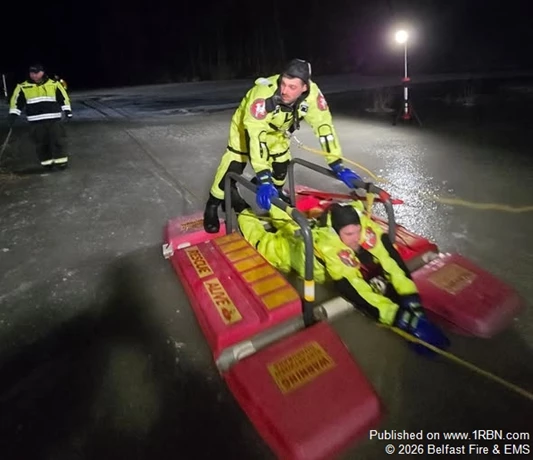
Photo by Belfast Fire & EMSCrews practice coordinated ice rescue techniques, emphasizing scene safety, communication, and controlled movement across frozen water.
January 13, 2026— Members of the Belfast Fire and Rescue Department conducted cold water rescue training on Jan. 13, focusing on preparedness for emergencies involving icy rivers, lakes, and coastal waters.
The training emphasized critical safety and response techniques, including scene safety assessment, ice awareness, reach-and-throw rescue methods, and coordinated team operations designed to minimize risk to rescuers while maximizing victim safety. Firefighters participated in hands-on, realistic scenarios that simulated conditions commonly faced during winter water emergencies.
A key component of the training involved the use of cold water rescue suits. These specialized suits provide thermal insulation, buoyancy, and protection against hypothermia, allowing firefighters to safely operate in freezing environments. Designed for durability and mobility, the suits enable rescuers to enter hazardous water conditions while maintaining the ability to perform precise, life-saving actions.
Department officials noted that regular, scenario-based training is essential to maintaining readiness and confidence when responding to cold water incidents, where time, temperature, and safety are critical factors.
Belfast Fire and Rescue continues to prioritize ongoing training to ensure responders are prepared to protect both the community and themselves during high-risk winter emergencies.
No information from the author.