










Asteroid Ryugu Reveals a Chemical History Older Than Earth


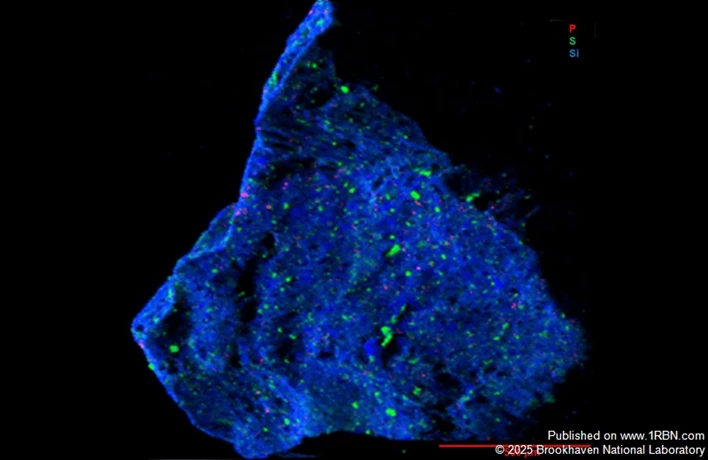
Photo by Brookhaven National LaboratoryMicroscopic view of a Ryugu asteroid grain, showing elemental distributions revealed through ultrabright X-ray imaging at NSLS-II.
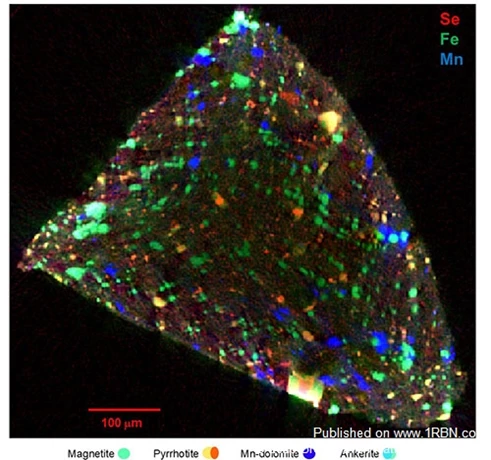
Photo by Brookhaven National LaboratoryMineral map of a Ryugu sample highlighting the diverse chemistry preserved from the early solar system.
On 17th Dec 2025, Researchers at Brookhaven National Laboratory have uncovered new insights into the ancient origins of Ryugu, using pristine samples returned to Earth by Japan’s Hayabusa2 mission in 2020. These rare fragments represent the first untouched material collected from a carbon-rich asteroid.
Two microscopic grains were examined at Brookhaven’s National Synchrotron Light Source II, where scientists employed a novel combination of ultrabright X-ray techniques. This approach allowed them to identify the grains’ elemental makeup, spatial distribution, and local molecular structure at an unprecedented scale.
The analysis revealed a complex mixture of minerals containing elements such as selenium, manganese, iron, sulfur, phosphorus, silicon, and calcium. These chemical signatures indicate that Ryugu underwent multiple stages of fluid-driven alteration early in its history, recording processes that occurred in the infancy of the solar system.
Understanding Ryugu’s chemical evolution offers valuable clues about how water and prebiotic organic materials may have been delivered to the early Earth, shedding light on the conditions that helped make life possible.
No information from the author.