





Poquonnock Bridge Firefighters Trained With New HEN Nozzles


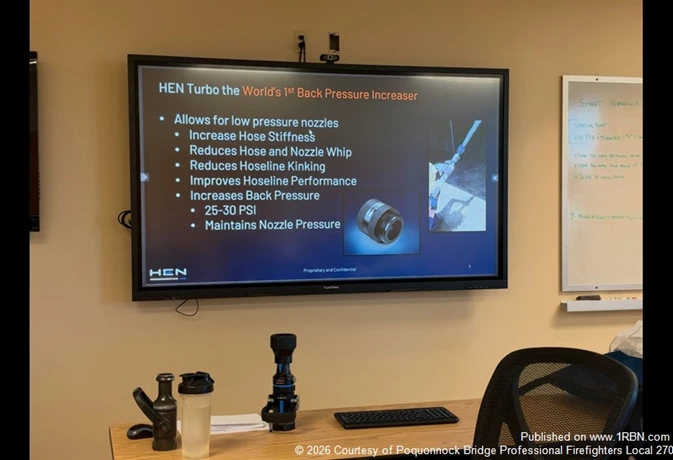
Photo by Courtesy of Poquonnock Bridge Professional Firefighters Local 2704
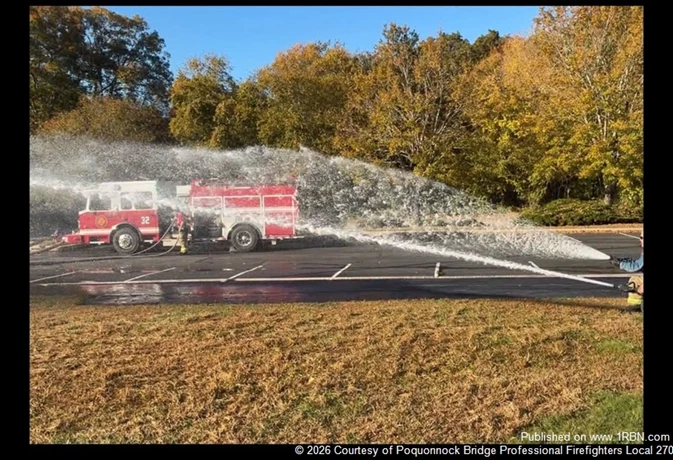
Photo by Courtesy of Poquonnock Bridge Professional Firefighters Local 2704
Groton, CT — October 23 — Members of the Poquonnock Bridge Professional Firefighters Local 2704 engaged in practical training sessions centered around the utilization of new HEN firefighting nozzles, with a specific emphasis on mastering nozzle operation, precise stream control, and effective water application techniques.
Throughout the training exercises, crews engaged with the novel apparatus to acclimate themselves to its operational nuances and maneuverability. Firefighters refined their proficiency in modulating stream patterns and regulating water discharge, thereby gaining a comprehensive grasp of the nozzle's functional capabilities through targeted application.
Engineered to merge the extended reach characteristic of a conventional smoothbore discharge with the expansive coverage of an adaptable linear stream pattern, the HEN BLADE nozzle system represents a significant advancement in firefighting apparatus. By incorporating a quarter-turn adjustment mechanism, this device empowers operators to transition seamlessly between distinct stream configurations while preserving precise command over water trajectory. Furthermore, the system's architecture was meticulously optimized to mitigate nozzle reaction, thereby substantially alleviating the physical exertion imposed on firefighters managing the hoseline.
This training afforded personnel the critical opportunity to operate equipment under controlled conditions prior to its deployment during emergency operations. Consequently, proficiency in nozzle performance, water application techniques, and equipment handling continues to constitute essential components of the preparation required for structural fire response crews.
The Poquonnock Bridge Fire District provided fire protection services across a multifaceted expanse of Groton, encompassing residential zones, commercial establishments, and critical transportation infrastructure. Given the varied nature of emergency incidents managed by the department, the consistent execution of equipment training emerged as a cornerstone of operational preparedness.The session underscored the critical importance of practical instruction and equipment acclimation in sustaining proficient fireground operations.
No information from the author.