









Crews Protect Exposures at Pittsgrove Warehouse Fire


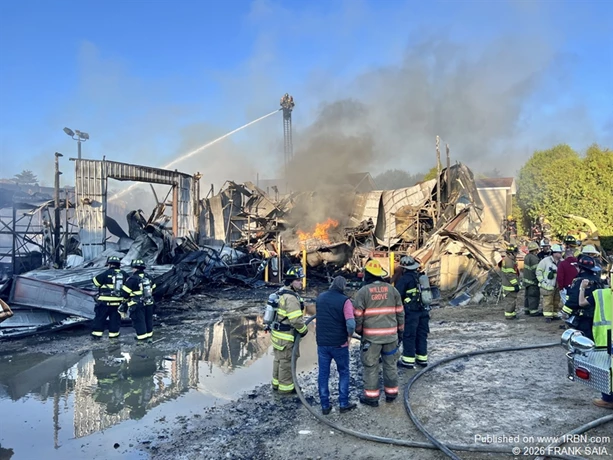
Photo by FRANK SAIAFirefighters operate at the scene of a second-alarm warehouse fire on November 8, 2026, in Pittsgrove, NJ. Crews battled advanced fire conditions while working to maintain a rural water supply and protect a nearby four-car garage and residence. Aerial operations and extensive overhaul were required before the fire was brought under control.
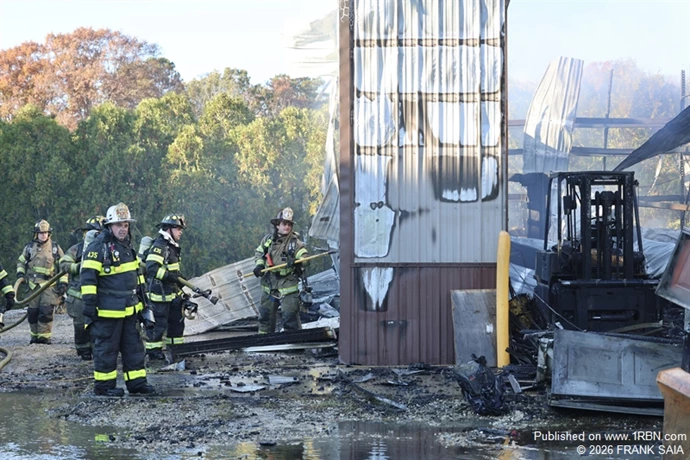
Photo by FRANK SAIAMembers of Franklin Twp's Malaga and Forest Grove Fire Companies work to overhaul and extinguish pockets of fire at the second alarm at 780 Big Oak Rd, Pittsgrove, NJ on November 8, 2026.
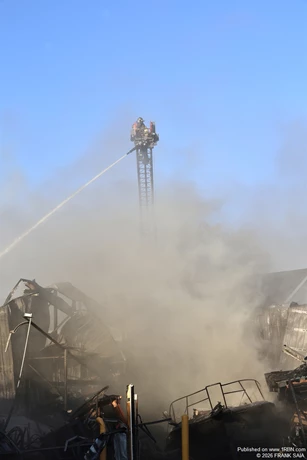
Photo by FRANK SAIARosenhayn FF Jayden Evans works atop the Vineland aerial to extinguish pockets of fire at this Pittsgrove second alarm.
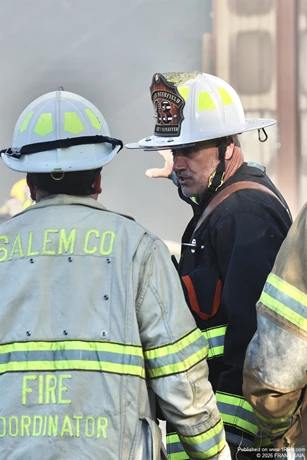
Photo by FRANK SAIAUpper Deerfield Fire Chief John Schaffer confers with Salem County Chief Fire Coordinator Jeffery Popper at the second alarm fire at 780 Big Oak Rd, Pittsgrove, NJ on November 8, 2026.
Firefighters responding to a reported warehouse fire encountered advanced fire conditions and challenging water supply conditions in a rural section of Salem County. Multiple companies worked to contain the fire while protecting nearby structures from extension.
Shortly before 1400 hours on November 8, 2026, the Salem County Fire Alarm Room transmitted a box assignment for a reported warehouse fire at 780 Big Oak Road in Pittsgrove, New Jersey. First-arriving units encountered a large, L-shaped warehouse measuring approximately 100 by 100 feet, with advanced fire conditions already present. The incident was subsequently reported as a second-alarm fire.
With limited hydrant availability in the area, a tender task force was requested to provide additional water resources for suppression operations. A drafting location was established at a lake nearly one mile from the fireground. The distance to the water source presented an additional challenge as companies worked to establish and maintain an adequate water supply.
Firefighters immediately began suppression operations while protecting two nearby exposures. A large four-car garage was located just a few feet from the burning warehouse, with a residence also situated nearby. Given the advanced fire conditions and close proximity of the structures, exposure protection was an important part of the operation. Crews successfully prevented the fire from extending to either building.
As suppression efforts continued, aerial operations were conducted, with a Vineland Fire Department aerial used to extinguish remaining pockets of fire. Companies continued working to bring the fire under control while maintaining water supply and monitoring the surrounding exposures.
Following the main suppression efforts, firefighters conducted extensive overhaul operations to address remaining hot spots and areas of fire involvement. The fire was eventually placed under control after crews completed the necessary suppression and overhaul work.
The incident required coordination among responding companies, particularly with the challenges of establishing a rural water supply and protecting nearby structures. Despite the advanced fire conditions encountered on arrival, firefighters successfully contained the fire to the warehouse, preventing damage to the adjacent garage and residence.
No information from the author.