






Safety First: Conducting Traffic Control


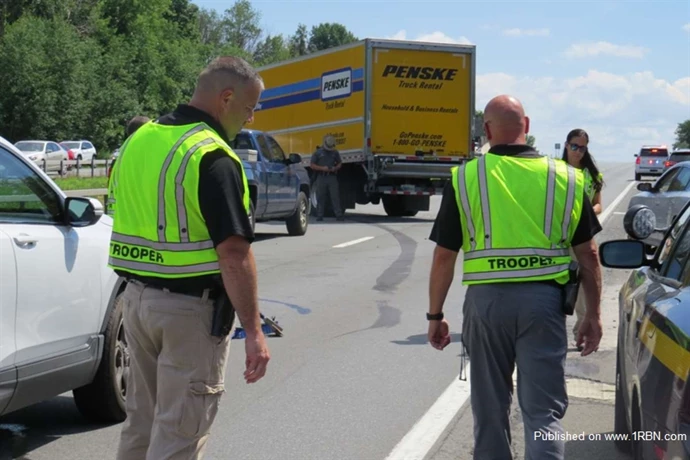
Photo by PROVIDEDTraffic control conducted at a MVA involving a state trooper, just south of the twin bridges on the I-87 northway, in July 2020. The trooper survived after being hit by a drunk driver in a rented Penske truck.
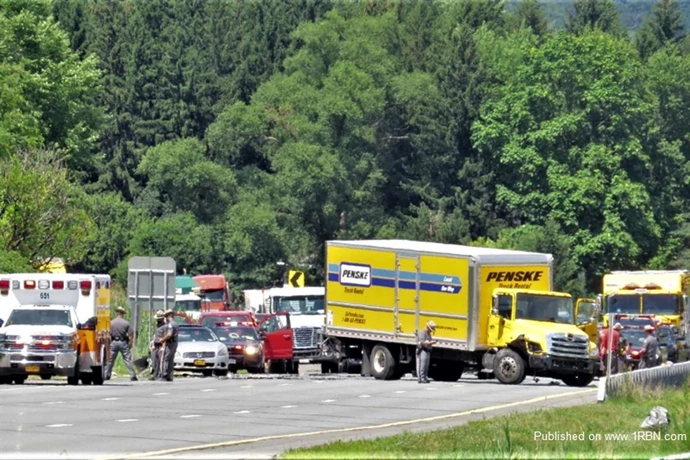
Photo by PROVIDEDMVA involving a state trooper, just south of the twin bridges on the I-87 northway, in July 2020. The trooper survived after being hit by a drunk driver in a rented Penske truck.
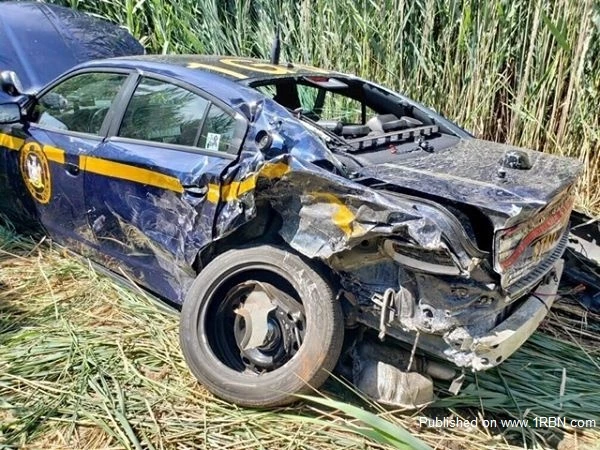
Photo by PROVIDEDMVA involving a state trooper, just south of the twin bridges on the I-87 northway, in July 2020. The trooper survived after being hit by a drunk driver in a rented Penske truck.
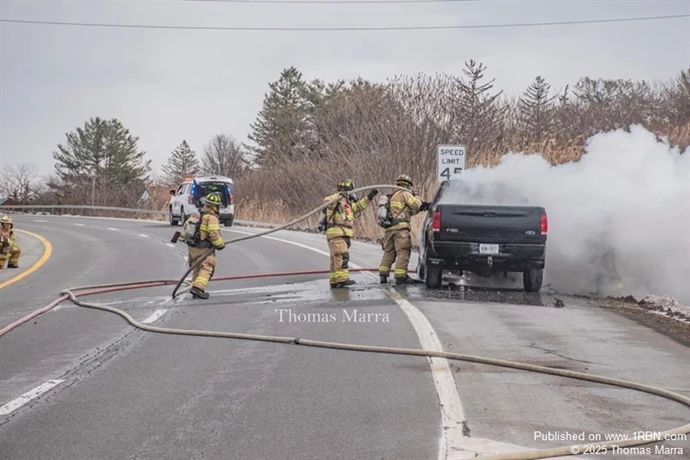
Photo by Thomas Marra A car fire in Delmar. Traffic control was an issue on a busy stretch of highway, so an apparatus was used to block the roadway.
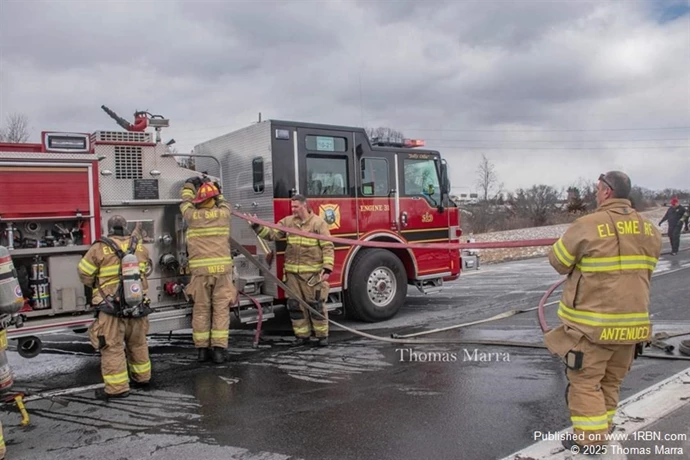
Photo by Thomas Marra A car fire in Delmar. Traffic control was an issue on a busy stretch of highway, so an apparatus was used to block the roadway.
When first responders bid farewell to each other (even in everyday greetings) a common phrase we use is “stay safe”. Since we all know that some of the outcomes being a first responder can be negative this phrase is simply wishing each other “safety” while doing the job. It is also a reminder to employ tactics and strategies on scene that will keep everyone safe. Although not the only first responders to employ blocking techniques to create a safe working zone such as law enforcement and EMS, firefighters play a significant role in conducting traffic control.
Fire apparatus is often used to block traffic due to the large size and high visibility, including lights on the rear and side of the vehicle. Even if fire apparatus isn’t the first on scene they are often used to replace smaller units such as law enforcement and/or an ambulance. The reason being that a larger and heavier apparatus can withstand another vehicle crashing into it without compromising the created safety zone behind it for other first responders.
One key element to increase the effectiveness of an apparatus blocking traffic are using cones. These devices have several positive effects including extending a safety zone, warning oncoming traffic well in advance and collapsing and reducing traffic in speed and drivable lanes. Cones should be placed at a distance between that is consistent with the speed of the roadway. They should also be placed at an angle that as mentioned reduces the roadway and directs traffic away from an emergency scene.
Arguably one of the most difficult aspects of traffic control isn’t the actual act of directing traffic but rather balancing priorities between the different first responder factions. This is not to say that the priorities of one supersede or that all first responder types don’t have the same concerns; that safety is the number one priority. That said, EMTs are going to be more focused on patient care while law enforcement may be more focused on allowing traffic to flow (if an accident occurs during rush hour). Adding in that any fire services present may be focused on any hazmat issues such as fuel leaks and the real or potential for a vehicle fire. The trick is to align as many priorities as necessary and/or possible without compromising first responder safety.
The key to any overlapping priorities is not putting your department in a compromising position from the start. Part of that lies on fire officer knowledge of the district they serve. At any given traffic scene, it is up to an officer to place apparatus at appropriate locations to allow and reroute traffic to get around an accident scene. Clearly, this is not always possible but knowing your district will increase safety while at the same time allow traffic to flow with minimal disruption. The bottom line the fewer vehicles that go through an accident scene the safer that scene will be.
While some inconvenience is bound to happen, I’m not going out on a limb by saying “too bad” to the driver burdened by having to take a slightly longer route to get their favorite cup of Joe. In my experience though the vast majority of people have their priorities straight and willingly cooperate with any traffic control efforts. However, it doesn’t take long for patients to run thin and everyone to start honking and getting out of control. It is imperative then to keep the situation under wraps from the moment you arrive.
One other way to minimize any traffic flow issues thus increasing safety is to let any traffic control device do the work for you. If firefighters direct traffic contrary to a traffic light as an example it will confuse drivers resulting in a very quick downward spiral in cooperation between traffic control and the public. Let’s face it traffic control isn’t exactly a glory detail but it does require a considerable amount of focus with any lapse in judgment or planned strategy potentially resulting in first responders getting injured. Because of the sustained focus and the fact that a given traffic accident may require several hours of personnel it is necessary and imperative that officers establish a rotation of firefighters to direct traffic making sure that appropriate PPE is worn in accordance with department SOPs.
As with all fire scenes good communication is a must. Making sure that all personnel have a radio (if working in pairs at least one has a radio) will allow better traffic management. This is especially true when a roadway becomes partially shut down and reduced to one-way traffic. Hand signals can work but most of the time firefighters on traffic duty cannot see each other.
In addition to apparatus placement and knowledge of your district it is also important for an officer to know the personnel available. Some departments have a dedicated unit called “Fire Police” that often drill on their own and have extensive knowledge of a given district. Fire Police can thus advise an officer on best practices for blocking and traffic control often deploying their own traffic control devices and equipment. This link shows a number of blocking techniques that can be utilized in various situations.https://youtu.be/Mu5wUlmo1Ow?si=FZ3M1099maQ759nw
In addition to being directly involved in traffic control and blocking firefighters can also do so preemptively. Working with parking enforcement to minimize incidents of blocking fire hydrants and fire lanes firefighters can set the stage for clear and safe working areas by ensuring that both of these zones are ready to go.
In spite of the fact that there are literally hundreds of SOPs that address blocking situations across the country there is one universal truth. The fact that at any given scene there will be someone that will ignore, “not see” (all the flashing lights) or think the situation doesn’t apply to them and will try and go through or around all the apparatus, personnel and other traffic control devices. Stay Safe everyone.
No information from the author.