






Fire Code Inspections – Part 1


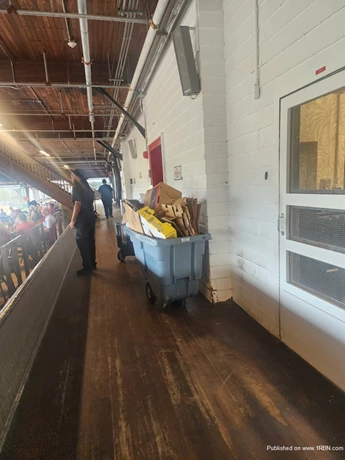
Fire Marshals have to prevent obstacles to egress.
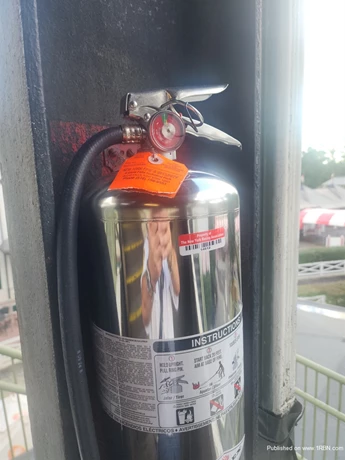
This fire extinguisher has a ripped tag taking it out of compliance.
Fire code inspections are preventative in nature. They are designed to catch potential issues before a fire could occur. This is in contrast to a fire investigation that would take place after a fire to determine cause and origin. Fire code inspections may involve routine assessments such as monthly reviews of fire extinguishers, emergency lighting or possibly ensuring the positioning of inventory, aka fire load, in a warehouse. Inspections are typically done for one of three reasons: new construction, renovations (including alarm and sprinkler system installation) or a received complaint.
Fire code inspectors operate under several titles including but not limited to Fire Officer (as an employee of a municipal fire department), Fire Marshal, Building Code Inspector, Fire Protection Specialist and Fire Technician. The guiding principles for what are more commonly known as fire code compliance are state building/fire codes and the National Fire Protection Association (NFPA) standards. Significantly, in order for the latter to have any “teeth” they would have to be incorporated into the state fire code. Otherwise, it is just a recommendation and would not be enough to legally have a business/home owner, contractor etc. comply with the codes.
Fire code inspections are not completed solely by state fire agencies. There are several public agencies that would complete fire inspections and each may have very different objectives. Usually, the public agencies are at the state and county level notwithstanding local fire departments. In New York State for example, the following agencies would participate:
Department of State
Child Protective Services
Office of Fire Prevention and Control
Department. of Environmental Conservation
Education Department
Each agency would have a specific emphasis. For example, the Education Department would focus on primary and secondary schools and more specifically, fire doors, extinguishers, egress and fire drills for students and staff. Child Protective Services would conduct life and fire safety inspections to assess if a home is safe for children including the presence of extinguishers, safe heating appliances and proper storage of flammables like matches, lighters and potentially combustible chemicals.
The private sector also employs several positions that would conduct fire inspections including but not limited to colleges, racetracks and insurance companies. In fact, many municipalities rely on third parties for electrical and plumbing inspections (relative to fire suppression systems) and for several reasons.
The first is a given municipality may not have the personnel to conduct fire inspections for every contractor. Barry Suydam, owner of Suydam Construction LLC out of Burnt Hills NY, indicated for this article that the vast majority of inspections to ensure compliance of the residential renovations and remodeling by his company are fire related. Secondly, there may be a training factor if a local code enforcement officer does not have the training for all aspects of a fire code inspection and are better left to a more seasoned professional. Even when private employers such as a college have fire technicians there may still be oversight required by a public agency to ensure compliance.
One concept to be discussed from the onset is “grandfathering” or as it is currently known as a pre- existing non-conformity. These terms refer to situations when a structure is guided by codes and standards that were in use at the time of construction as opposed to current codes and standards. For this reason, inspectors will usually keep copies of older codes to ensure compliance is within the applicable standards.
This does not mean that just because a building is fifty years old that it is not subject to more modern- and present-day codes. There are several factors that would negate a structure being grandfathered i.e. pre-existing non-conforming status relative to fire codes. These would include but are not limited to the following situations:
If a building/structure was never in compliance with fire codes then it would not be grandfathered because it was never legal to begin with. This would include a situation when an inspector mistakenly passes a structure as acceptable. A second circumstance would be access to an electrical service disconnect. This is actually a national code issue. An example would be an apartment building where previously only the landlord would have access to an electrical panel shut off whereas nowadays every tenant has to have access to the shutoff in the event of an emergency.
Further, if a structure abandons its use for a year (this may be a local code) then it would lose its grandfathered status. If a bed and breakfast were to cease operations as such for a year, any new use after that would negate any pre-existing, non-conforming status and would then have to comply with new codes such as having to install a sprinkler system. Lastly, if a structure changes substantially (which can be highly subjective) it could subsequently lose its grandfathered standing. A good example would be old circuitry either losing (by industry standards) or the revocation of its Underwriters Laboratory (UL) status.
Some fire departments will conduct preventative inspections for their district residents. If a local fire department has the personnel to conduct these invaluable inspections it is suggested that a waiver be utilized to limit liability and to thoroughly document all findings. In this example firefighters would, at the request of a homeowner, visit and assess the home for potential fire hazards and safety measures. A four-gas meter could be used around any gas appliances and a receptacle tester to ensure outlets are properly grounded. Further recommendations could be fire extinguisher presence and placement, GFI outlets around water sources in kitchens/bathrooms and depending on the structure a fire suppression system.
Keep in mind that when conducting fire code inspections to emphasize that they are done so for the safety and protection of residences and businesses and not some “gotcha moment”. This is not to say that there won’t be some negative outcomes such as potential fines or driving up construction costs but by and large the various fire codes and NFPA standards are designed, (sometimes changed) and implemented to prevent a tragedy from occurring.
No information from the author.