






“911...What’s Your Emergency?”


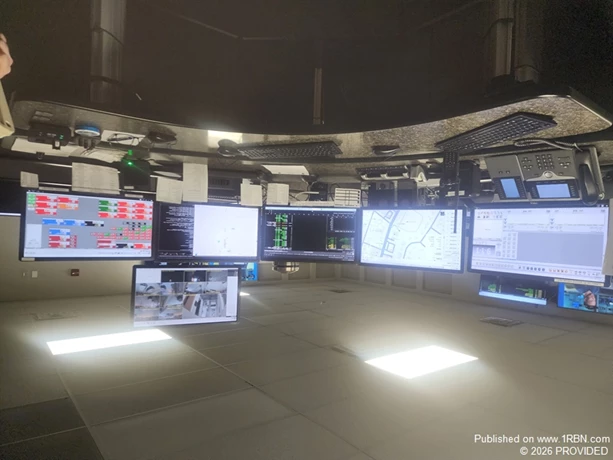
Photo by PROVIDEDUnited Communication Center in Rotterdam is the dispatch center for Schenectady County.
Before reading further, take a moment to give some applause to an often-overlooked group of people who, without them, would make it impossible for firefighters (and other first responders) to do their job. Yes, I am talking about the dispatchers. If ever the phrase “Don’t take it out on the messenger” is at its most applicable it would be while interacting with emergency dispatchers. This is simply because they are only relaying the information that they receive. Sometimes a confirmed outdoor fire turns out to besomeone chillin’ around the fire pit. But that’s how it was called in and that’s just the nature of the business.
There are numerous tasks and trials for dispatchers. Not only in dealing with the public but also the first responders on the other end of the microphone. A common thread for both groups is that dispatchers have to remain calm, focused and in control at all times, regardless with whom they are communicating. If a dispatcher matches the intensity of the caller, then the situation will only escalate. Overall, caller intensity makes it more difficult to gather accurate data where incomplete information can potentially endanger the caller and first responders.
Dispatchers are often dealing with high-risk, quickly-evolving situations and in that sense are no different than other first responders where seconds count. Turning a request for additional resources into actually mobilizing an extra apparatus off the floor is no easy task. This is especially true when considering other required duties such as entering data into the Computer Aided Dispatch (CAD) system, handling radio traffic, monitoring multiple incidents and updating responders with new information.
When communicating with the public, one of the biggest challenges is that everyone’s situation is an “emergency”. Whereas that may sound very unsympathetic it is up to the dispatcher to be able to decipher the true nature of the call. Dispatchers often have to ask multiple questions to make sure the proper resources are called in. Sometimes callers perceive any questions as inaction when the reality is that the dispatcher has already started emergency services to them. A second challenge when speaking with the public is that there is a tendency to tell a story while the dispatcher needs to get pertinent information quickly and efficiently and does not necessarily have time to let someone ramble on – “just the facts, please”.
In some rare circumstances sometimes the system itself can be a challenge. Case in point is the radio systems and frequencies used. Although my experience as a dispatcher is limited, one circumstance that repeatedly surfaced was some first responders using digital radios while others were using an analogue system. Those with digital radios could hear all radio traffic while the analogue users could only hear themselves which made dispatching resources a challenge. Additionally, some first responders are on a dedicated channel and thus not privy to other radio traffic whereas the dispatcher is handling all radio communications at once.
So, what actually happens when an emergency call comes in? A recent visit to the Universal Communications Center (UCC) in Rotterdam, NY yielded some really interesting observations. Each dispatcher has multiple screens in front of them each with different functions. This is the CAD system. When someone calls “911” their approximate location is displayed on one screen with data entry on another. The dispatchers listen to the caller and enter information based on the caller responses. The CAD then displays a number of potential responses. This process repeats and continues until the true nature of the call is deciphered and the proper emergency services (if any) are dispatched to the location in question.
Because the responses are generated by the CAD system one can draw a conclusion that it takes the human element out. Perhaps that is true but that is exactly what you want because reading pre- determined responses allows a dispatcher to remain monotone and not escalate the situation. Once the correct emergency type is delineated then the appropriate response is sent. That could be fire, EMS or law enforcement. Keep in mind that the entire transaction from initial call to dispatched resources may only be a minute or at most two.
Being a dispatcher is a great stepping stone to employment later on as either law enforcement, firefighter and EMT. This is simply because having a working knowledge of some of the behind-the- scenes operations is invaluable. It’s not going out on a limb to suggest that every firefighter (especially officers) should visit and talk to the dispatchers that are sending apparatus and/or additional resources. This will certainly aid in size-up and decision making on the fireground.
As an example, the CAD will also display for the dispatcher all the available resources that are “on the box” and in what order. Officers on the fireground should also know this information. Typically, all necessary resources (save those that are called for after the initial call) are dispatched simultaneously. The dispatcher will highlight each department and the resources needed i.e. engine, truck, EMS etc.. and then click on “send” once which will alert everyone at the same time. Because the CAD can only send one signal at a time if the dispatcher clicks on and sends each resource one at a time it will obviously take longer and may confuse the system with overlapping signals.
What does it take to be a dispatcher? From an educational requirement standpoint typically only a high school diploma (or equivalent). This is mostly because dispatcher positions rely heavily on on-the-job training. Working with a certified dispatcher for several weeks or even months newly hired dispatchers will learn the CAD system, basic radio etiquette, call talking/questioning, agency policies and standard operating procedures. Additional requirements may be a first aid/CPR, online coursework, NIMS certifications, background check and possibly a civil service exam.
This article is dedicated to the dispatchers of the City of Saratoga Springs (some of whom contributed to this article) and who not only perform above and beyond but always have my safety in mind.
No information from the author.